Showing posts with label Top 5. Show all posts

Monday, December 10, 2007

Top 5 Lessons from Pearl Harbor

Varifrank lists 8 Lessons, but here is the his top 5 from America's first Day of Infamy:

  1. Nothing starts a war faster than someone having the stray idea that you really don't want to fight.
  2. Just because your enemy has its ambassadors in your capital speaking to you about peace doesn’t preclude the fact that they don’t also have a fleet of aircraft carriers on their way to strike your fleet.
  3. Talks about peace are almost always diplomatic cover for the military to do what it does at a time of their choosing.
  4. Your enemy doesn’t work to your schedule.
  5. Your big bad battleship is tomorrow's sunken target.
Go to the site for the rest, and pray America takes heed next time.

Tuesday, November 13, 2007

5 Reasons Antiwar Films are Failing

The numbers are in,proving Hollywood's war on the war isn't bringing in the audiences or the bigs bucks that were hoped for, or even a change in US strategy against the terrorists. Here are 5 likely explanations:

  1. Most Americans still love our country, and support Bush's efforts to prevent a repeat 9/11. If Hollywood reflected the spirit of the hopeful majority, rather than the angry minority, then their films might actually make money.
  2. People go to the movies to be entered, not be preached to or made to feel guilty. This can be seen from the triumph of family films like Bee Movie over Robert Redford's anti-war flick Lions for Lambs, starring Tom Cruise!
  3. Hollywood is out of touch. It's common knowledge of the Leftist domination of Tinsel Town, who's mindset often involves seeing the world as they wish, rather than the reality. Their disdain of the military and American values put them at odds with the movie going public who still want to believe in heroes.
  4. Americans aren't as frustrated over Iraq as the movie makers contend. Sure, everyone's tired of the war constantly in the news, but they also don't want us to fail, especially when the consequences of defeat to Osama Bin Laden is unthinkable. Now that things are looking better, thanks to Gen. Petraeus' Surge strategy, more Americans are upbeat about our chances of winning.
  5. The are other choices. There are so many entertainment choices in today's society, from computers, Ipods, home video, pay per view, ect., that its far easier to stay at home, thus saving $20, $50, or even $100 to go to a crowded theater and be sermonized by a culture that gives us the likes of Rosie O'Donnell and Britney Spears.
There's so much recently in the news and blogosphere on the subject, but a good starting point is here and here.

Saturday, November 10, 2007

5 Reasons George Bush Rocks!

I could think of lots more, most to do with winning the War on Terror and standing up for democracy everywhere, but here are 5 reasons to admire President Bush just from the past week or so!

  1. Chronic homelessness has declined.
  2. Productivity is way up.
  3. The President of France has nice things to say about us.
  4. SDI is becoming ever more effective.
  5. A school opens in Iraq where terrorists used to rule.
I get amused when the MSM says things like "Lame Duck" and "Failed Administration", when we are winning in Iraq and the Democrat Congress gives the President anything he needs to fight that war, including an attorney general who's concerned more about the safety of Americans than the rights of terrorists!

Thanks to Mark Noonan for the list.

Friday, November 02, 2007

5 Tide-Turning Battles of 1942

The death-knell of the Axis in World War 2 was surely sounded during the fall of this year exactly 65 years ago, involving millions of soldiers and tens of thousands of planes, tanks, and aircraft. Likely the greatest year of battles in all history:

  1. Stalingrad. Hitler's all out attempt to knock Russia out of the war ended in disgraceful failure for the vaunted German Army with 1.5 million casualties suffered out of 3 million soldiers total. Russian forces under Zhukov began their encirclement of the city on November 19, soon trapping the entire Nazi 6th Army of 250,000 troops. Luftwaffe assurances they could resupply the trapped forces came to naught and Hitler's besieged forces surrendered in February, 1943.
  2. El Alamein. British Forces under Gen. Bernard Montgomery permanently drove the Germans under Erwin Rommel out of Egypt, in a battle lasting from October 23-November 5. Churchill nearly despaired of finding a commander to defeat the wily "Desert Fox", who ran rampant in the British North African colonies since March of 1941. Rommel was on medical leave in Europe at the start of the battle, but returned in time to oversee his Afrika Corps' abject retreat. British forces totaled 220,000 plus 1100 tanks, with the Nazis/Italians fielding 116,00 and almost 600 tanks.
  3. Operation Torch. The Anglo/American invasion of Vichy French controlled North Africa on November 8 signaled the end of Nazi dominated Africa and the entrance of the USA into the land struggle against Germany. The 73,500 Allied troops were led by a newcomer, Dwight Eisenhower, who hoped to turn Vichy against the Nazis, after the former's falling out with the British early in the war. All objectives were quickly seized in a relatively easy campaign, but failure to immediately capture Tunisia meant the African War would drag on until May 1943.
  4. Guadalcanal. The Fighting started in August 7, 1942 after the American invasion of the Japanese controlled island, and reached a peak in October with the landing of 15,000 enemy troops to combat the 23,000 US Marines under General Alexander Vandegrift. By November 4, the Japanese offensive under General Harukichi Hyakutake had clearly failed, coupled with several naval actions directed by Admiral William Halsey off the islands, secured America's first counterattack after the Battle of Midway. Fighting continued until the Japanese withdrawal by February 8, 1943.
  5. Buna-Gona. American and Australian forces under General Douglas MacArthur began this attack against 2 villages to drive the Japanese out of New Guinea on November 16. The 20,000 weary and sick Allied troops faced some 6000 well entrenched Japanese soldiers. The Australians succeeded in capturing Gona on December 6, and after MacArthur fired their commander, the Americans took Buna on December 28.
Winston Churchill described this period of the war as "not the beginning of the end, but it is perhaps, the end of the beginning".

Thursday, November 01, 2007

5 Myths of Modern War

Borrowed from this article by Ralph Peters- 12 Myths of 21st-Century War:

  1. War doesn't change anything. Wars, in fact, often change everything. Who would argue that the American Revolution, our Civil War or World War II changed nothing? Would the world be better today if we had been pacifists in the face of Nazi Germany and imperial Japan?
  2. Insurgencies can never be defeated. Historically, fewer than one in 20 major insurgencies succeeded... In the mid-20th century, insurgencies scored more wins than previously had been the case, but that was because the European colonial powers against which they rebelled had already decided to rid themselves of their imperial possessions... In the entire 18th century, our war of independence was the only insurgency that defeated a major foreign power and drove it out for good.
  3. There's no military solution; only negotiations can solve our problems. In most cases, the reverse is true. Negotiations solve nothing until a military decision has been reached and one side recognizes a peace agreement as its only hope of survival. (As proved in Vietnam and the Arab Israeli Wars, endless negotiations can needlessly extend wars, causing even greater hardship and suffering on both sides).
  4. When we fight back, we only provoke our enemies. When dealing with bullies, either in the schoolyard or in a global war, the opposite is true: if you don't fight back, you encourage your enemy to behave more viciously...But if we're unwilling to fight the fraction of humanity that's evil, armed and determined to subjugate the rest, we'll face even grimmer conflicts. (Read: Czechoslovakia 1938)
  5. Our invasion of Iraq created our terrorist problems. This claim rearranges the order of events, as if the attacks of 9/11 happened after Baghdad fell. Our terrorist problems have been created by the catastrophic failure of Middle Eastern civilization to compete on any front and were exacerbated by the determination of successive U.S. administrations, Democrat and Republican, to pretend that Islamist terrorism was a brief aberration. Refusing to respond to attacks, from the bombings in Beirut to Khobar Towers, from the first attack on the Twin Towers to the near-sinking of the USS Cole, we allowed our enemies to believe that we were weak and cowardly.
Even more Myths at the link.

Tuesday, October 30, 2007

5 Lessons from the 1956 Suez Crisis


After the nationalization of the Suez Canal in July 1956 by Egyptian dictator Gamal Abdel Nasser, the British and French, along with Israel launched Operation Musketeer, on October 29 and the 31st of that same year. Militarily the air-land-and sea campaign was a glorious success, but politically it was a failure as the 2 new superpowers forced the three victorious allies to back down. The Middle East hasn't been the same since, and from this we get these 5 lessons:

  1. Don't abandon your allies. Britain and France were wrong in launching the operation without first consulting their most important ally, the USA. Yet, America was equally at fault for siding against their partners to be humiliated by coercion from the Soviet Union, and for leaving the Canal in the hands of a dictator. Britain would eventually withdraw from the region, leaving a power vacuum that America had to fill, and France soon quit NATO.
  2. Seapower is still essential. Even in the age of jet fighters and the atom bomb, the allies proved that naval forces were still vital, as did the Korean War 6 years earlier. Seven Anglo/French aircraft carriers participated in the operation, including the first use of helicopter-borne assault troops. Britain would relearn this same lesson 26 years later in the Falklands Conflict.
  3. Don't give in to dictators. Prime Minister Anthony Eden rightly likened Nasser's power grab to the rise of Hitler and Mussolini in the 1930's. The principle reason for launching the Operation was not just securing the Canal for the West, but forestalling future war and instability in the region. Considering the trouble we find ourselves currently in the Middle East, the reasoning was a sound then as it is now.
  4. Israel is the West's best friend in the Middle East. Musketeer couldn't have been pulled off so smoothly without military support from the Israelis, who quickly seized the East bank of the Canal. Besides being a superpower in the region, Israel shares common European values, and didn't need to be dragged kicking and screaming to accept democracy. Any diplomatic agreement with the Arabs that threatens the security of Israel should be avoided at all costs.
  5. Don't underestimate the British. By 1956, Britain may have been a weakened Empire, but the amazing strike on the Egyptians so far from her shores proved the Royal Navy was still a force to be reckoned with. The Argentines would repeat the folly to their chagrin in 1982, Saddam Hussein in 1990 and 2003, while Iran currently is headed down the same disastrous path.
Due to pressure from the Eisenhower Administration, and missile threats from Khrushchev, the British and French were forced into a shameful withdrawal. Afterwards, the UK began a drastic cutting of her armed forces, while speeding up the decolonization process. Nasser would give birth to a new Arab nationalism that has shaped our modern world, mostly for the worse. The Soviet Union, which got away with squelching Hungarian freedom at the same time, felt emboldened to demand further concessions from the West, eventually leading up to the Cuban Missile Crisis in 1962. Ike would later say he regretted the decision to abandon the Allies at Suez.

5 Ways to Get the World to Like Us Again

Hillary says she would send out her ambassadors to do this, but I like Ron Silver's take, as long as his tongue in still in his cheek:

  1. We can start by helping the Arabs retake Andalusia. Having conquered it once, it belongs to them forever.
  2. Let’s remove our troops and fleet from the Pacific. I’m sure, without our meddling, China, the Korean Peninsula and Japan and Taiwan in addition to Indonesia, Malaysia and Singapore as well as Indochina will finally be able to get over centuries of enmity.
  3. Disband NATO—the French never really liked it anyway.
  4. South America and Mexico and Canada are easy. Open our borders.
  5. Leave Africa to the international community, with its many indispensable nations, Russia, China, the EU and Principe and San Tome to take the lead. With the able assistance of the Great African Leaders of Sudan, Chad, Somalia and Zimbabwe, Kofi Annan who was head of peacekeeping for the U.N. during the genocides in Rwanda and Srebrenica, and as Secretary General, presided over the massacres in Darfur can help his former colleagues work it out.
Yep, then all will be right with the planet. Of course, who then will the world blame for its troubles? Read the rest of this funny article.

Monday, October 29, 2007

5 Consequences of the Cuban Missile Crisis


The military confrontation between the USA and the Soviet Union over nuclear missiles in Cuba, in October of 1962, is often cited as the closest the 2 rival powers came to all-out nuclear war. While a timely US naval "quarantine" by President Kennedy forced Russian leader Nikita Khrushchev to withdraw the weapons, there were losers on both sides, as these 5 points indicate:

  1. Hard liners seized control of the Soviet Union. After forcing out Khrushchev who was considered a failure over the crisis, a new leader, Leonid Brezhnev led the Russians in a massive new arms race with America that nearly gave them victory in the Cold War. It was only matched by the USA beginning in the 1980's by President Ronald Reagan.
  2. Decline of the Democrat Party. The Crisis was a high tide of the Party that defeated fascism in WW 2, and began the Cold War against the Soviets. Though they had pulled off an enormous diplomatic coup, the Kennedy Administration was apparently so intimidated by nearly starting World War 3, they agreed to nuclear parity with the Warsaw Pact. Negotiations over arms became common, and soon were the rule with the failed Detente Policy, with the Soviets often came out best in these deals. Defense Secretary Robert McNamara felt they had won the Crisis by restraining the military from launching a war, thus began a reflex suspicion of the Armed Forces within the Party.
  3. Road paved to Vietnam. When the decision came over how to combat communism in South East Asia, the advice of military leaders were often ignored, thus beginning the path to failure in the War. McNamara's successful micro-managing of the brief crisis didn't work so well in a sustained military campaign, and is often cited as the cause of our defeat in Vietnam.
  4. Cuba remained communist. By assuring the Soviets that Cuba would not be invaded, as a condition for removing the missiles, the island nation would remain in bondage to failed socialism long after communism had fallen in Eastern Europe.
  5. Allies on both sides felt alienated. The Cubans under Fidel Castro were angered that Russia agreed to pull out the missiles without consulting them. Likewise was Turkey left out of the loop over the secret America deal to dismantle nuclear rockets in that country. Britain and France accelerated their own nuclear programs, after being ignored in the Superpower negotiations, even though they would be on the frontlines of any war between the 2 antagonists.
Certainly a turning point in the Cold War, with America increasingly on the decline, but still constantly on her guard. Luckily, the slide toward defeat was halted in time under Reagan and a revitalized conservatism to steer the Soviets toward a peaceable collapse.

Sunday, October 28, 2007

5 Lessons of War from the Falklands Conflict


25 years ago the first major air-land-sea war of the Missile Age was fought over a few sparsely populated islands in the far-off South Atlantic. Being the first major naval encounter since World War 2 with large fleet units on both sides, the 1982 Falklands Conflict offers many useful insights on conducting future warfare:

  1. Numbers still count. Before the war, Britain was prepared to sell off a huge chunk of her Royal Navy, including a brand new aircraft carrier plus her 2 remaining assault landing ships, while reducing the number of Royal Marines. The timely Argentine invasion interrupted these plans with bare months to spare. Also, when several warships were lost due to cruise missiles and bombs, these were easily replaced in the frontline thanks to her large fleet of over 50 destroyers and frigates.
  2. Military heritage still matters. Though the British armed forces were a shadow of her Imperial self, it still could field several old and highly skilled infantry units, including the Parachute Regiment, Royal Marines, SAS Commandos, the Ghurkas. Such professional volunteers easily bested the ill trained conscripts of the Argentine Army.
  3. Cruise Missiles decide strategy. The single factor in the placement of naval forces, other than the exceedingly long logistical chain to the South Atlantic, was the new power and reach of cruise missiles, as proven dramatically after the sinking of HMS Sheffield by a single Argentine Exocet missile. The British carriers were forced to sail at their planes operational limit to distance themselves from this threat, and the sinking of the cruiser General Belgrano was decided for fear she carried such weapons. The loss of a single aircraft carrier might have decided the war.
  4. Every ship is an aircraft carrier. The capabilities of the Harrier "jump jet" astounded friend and foe alike, with its capability against land based fighters, while being able to fly in the most adverse weather off any flight deck. Such planes could fly off a short runway of light carriers, or even a merchant vessel. The West's future jump jet, the F-35B Lightning could be spread throughout the fleet, along with new unmanned aerial vehicles, rather than limited to a few vulnerable and expensive platforms.
  5. The submarine is the new capital ship. This can be proved after a few observations of the sinking of the Argentine ship Belgrano by HMS Conqueror. The escorting destroyers chose to flee for their lives after the sinking, when in WW 2 they would have immediately attacked the aggressor sub. Likewise the Argentine Navy fled to port for the duration of the conflict. The lesson here is: Ignore the power of the modern nuclear attack sub at your peril!
Thus from this single battle we divulge these 5 lessons which matter most in future war: plenty or enough of the right weapons, well-trained infantry, non-traditional aircraft, precision guided weapons, and submarines. Future military strategists and politicians in charge of buying new armaments, please take note!

Wednesday, October 24, 2007

5 Ancient Aircraft in Frontline Service

Earlier I posted to a story titled "A fighter conceived in the 1960s is still on the job". You may be surprised to learn that there are several types of aircraft still in service today from the 1950's and 60's, which are not only still in active service, but are the backbone of our Flying Forces, including:


1). B-52 Stratofortress: The concept for this granddaddy of bombers was first conceived in 1945, under the old Army Air Force! Originally designed as a straight wing, propeller driven aircraft, Boeing took it on its own to create the more revolutionary swept wing jet bomber we know today. First flown in 1952, the USAF received its first operational version in 1955. The B-52H version which our pilots fly today, was accepted in 1962, the last in October of that year when John F. Kennedy was President! An astounding total of 744 planes were bought, with 94 still flying.


2). KC-135 Stratotanker: Probably the most essential of our ancient aircraft, without which our forces would lack the global reach it possesses today.The first of a total of 732 were bought by the Air Force in 1954, with 550 remaining in service. A replacement for this venerable and essential warhorse remains elusive.
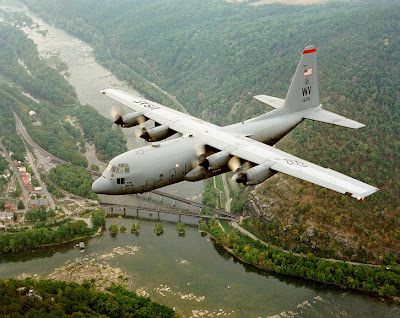

3) C-130 Hercules: Another essential senior citizen for all services, including the Coast Guard, the mighty Herk was first conceived at the height of the Korean War in 1951! Worldwide, some 2100 have been built, with the USAF alone still flying over 500. First flight was in 1954, and production continues today with the "J" version, over 50 years later!


4) U-2 Dragon Lady: What better plane to replace our Mach 3 capable super spyplane SR-71 Blackbird (retired in 1998), than the same sub-Mach aircraft it was supposed to supersede! Designed by the famed "Kelly" Johnson at Lockheed's "Skunk Works", the U-2 first entered service in 1956. It came into public view after being shot down in 1960 while flying over the Soviet Union. Likely to be supplanted by unmanned aerial vehicles, this must be the only aircraft on record to have outlasted its replacement.


5). CH-46 Sea Knight: This twin roter Navy and Marine helicopter first entered service in 1960, with the last rolling off the assembly line in 1971. These giants have served faithfully from Vietnam to today's wars in the Gulf. Of 625 built, 239 still remain in service, mainly with the Marines. Its successor will be the V-22 Osprey tiltroter plane, itself a concept from the 1970's!


Most of these well-used planes have been extensively updated over the decades, as is the case with the B-52, with modern weapons and electronics, until there are basically new aircraft. Makes you rethink the need for the expensive R & D costs and long development periods of modern planes, when you can just keep the production line going on still-useful airframes year after year!

Monday, October 22, 2007

Top 5 Fantastic War Comics


Earlier I posted on how sad it was the modern comic book industry has failed to stand up to the task of supporting our war effort against the terrorists, as they have in years past in our struggle against Nazis and communists. This wasn't always the case, as can be seen in these 5 classic war comics:

  1. Sgt. Rock-The "Rock" of Easy Company first appeared in the famed war book GI Combat in 1959 as created by the legendary Bob Kanigher, and soon became a fan favorite. He got his own comic in 1977, but not before introducing us to such memorable characters as Bulldozer, Little Sure Shot, Jackie Johnson and Wildman. Rock was a tough as nails combat leader who led his platoon through World War 2 in numerous battles, often charging against Nazi tanks armed with only a rifle and hand grenades!
  2. The Haunted Tank-Also a staple in GI Combat, created by Kanigher, and a very unique comic at that! The story concerns a certain Lieutenant Jeb Stuart whose Stuart tank is haunted by his Confederate namesake. General Stuart often gave Jeb advice in the form of parables. Jeb is also the only one in the tank who can see or hear the general, making for some interesting dialogue from the crew, who often question their commander's sanity. First appearance was in May 1961.
  3. The Unknown Soldier-More war with a horror twist created and drawn by the great Joe Kubert. First appearance was in 1970 and concerned a WW 2 soldier horribly disfigured in combat. He becomes an intelligence officer and a master of disguise, but is often seen with his head in mummy-like bandages. Occasionally he removed the wrappings to the horror of his Axis antagonists.
  4. Sgt. Fury and his Howling Commandos-Stan Lee, ably assisted by artist jack Kirby introduced us to the cigar chomping Nick Fury in May 1963. The stories originally centered on Fury and his elite commando's WW 2 adventures, but soon they were fighting the Cold War. In 1965, Fury became a James Bond type spy leading the super-secret organization known as S.H.I.E.L.D.
  5. Blackhawk-How cool was this! Created by the Spirit's Will Eisner, among others, the story centered on an elite team of international pilots who banded together to fight the Nazis. The main character and leader of the same name was an American of Polish extraction. Other team members included Andre, Olaf, Stanislaus, and Chop-Chop.First appeared in 1941 in Military Comics. The best part of Blackhawk were the cool planes, which after the war went from propellers to jets!
Other notables include the Losers, the Invaders, Boy Commandos, Enemy Ace, among many others. As a genre, the war comic mostly disappeared by the 1980's, but some are cropping up in reprint collections, and are also traded constantly on auction sites like eBay.

Scan is from the author's collection.

Saturday, October 20, 2007

5 Ways The British Empire Might Have Survived WW 2


If the First World War started the decline of the British Empire, then certainly the Second provided the death stroke. In 1947, she gave up the "Jewel in Her Crown" which was India, and only a few years later lost the Suez canal. Today she is only a medium sized power with just a handful of tiny Island dependencies left of her once mighty empire. Here are 5 initiatives which might have turned the tide for the UK, and made her a great power for just a little while longer:

  1. Continued building Ark Royal aircraft carriers. In 1938, the Royal Navy received a warship with a large aircraft complement (up to 72), similar to US and Japanese vessels which eventually dominated the Pacific War. Rather than building more of the excellent Ark Royals, a class of armored carriers were started which used up precious steel that could have went to building desperately needed tanks. The new Illustrious ships only loaded half the aircraft, and was very difficult to repair when damaged. The argument for the extra armor was Britain's lack of high performance naval aircraft, and their likely use near enemy land bases, but in the Pacific America learned that a highly trained damage control party could perform miracles, and a wooden deck could be quickly and easily prepared.
  2. Wavell Takes Tripoli. After the astonishing victory of Beda Fomm over the Italians in February, 1941, and before the Germans entered the North African War, the road to Tripoli was wide open. Instead, the British Middle East commander gave in to pressure to gut and scatter his victorious Desert Army to aid the Greeks, with a second Dunkirk the eventual outcome. The reason later given by Churchill was the need to delay the German invasion of Russia by a few precious weeks, but this is only speculation. Defeating the Italians first before Rommel entered the scene would have freed the British for other imperatives, such as defending its Far Eastern colonies, or perhaps invading Italy 2 years earlier.
  3. Fighting the Battle of Britain overseas. Early in the war, British forces overseas suffered greatly for lack of fighters, including at the disastrous Battle of Crete, and the humiliating Fall of Singapore. Yet, where were the victors of the Battle of Britain at this time but performing "fighter sweeps" over Europe and baiting the German Luftwaffe. Hundreds of precious Spitfires and pilots were lost in the sweeps for no real gain. Better use of the Few would have been defending the colonies overseas.
  4. General Percy Hobart as England's Patton. At the dawn of the war in 1939, Britain possessed one of the world's premier experts on tank warfare, but he and his radical views on armor were discarded. Churchill later found Hobart as a Home Guard corporal defending his local village from the expected German invasion. Hobart was the genius who led the revolutionary tank maneuvers of the 20's and 30's and created the famed 7th Armored division, the Desert Rats in North Africa. He was a prickly character who offended almost everyone, but whose expertise and aggressiveness should have been kept during Britain's darkest hour. Eisenhower often overlooked George Patton's eccentricities because he knew his subordinate could win battles. By sacking such a valuable asset early in the war, Wavell proved he was no Eisenhower.
  5. Winning the Battle of the Atlantic First. The Royal Navy's war with the U-boats began in 1939 and wasn't considered won until the summer of 1943. The RAF Bomber command absorbed massive aircraft resources during this period, with very little to show for it, while the submarines hindered the planned D-Day invasion of Europe, thus extending the war. If the bombers had been diverted to Coastal Command from the start, and the U-boats defeated or at least contained in the Baltic, the RAF could have restarted its campaign later. Meanwhile, with North Africa cleared of the Axis (see above), the invasion of Europe could have occurred much earlier, even in late 1942!
With a few battlefield victories under her belt after the Americans came in the war, the British might have had a bigger say in the postwar direction of Europe, such as Churchill's insistence on invading the Balkans to keep East Europe from the Russians, and beating Stalin to Berlin. As it was, because of her early disasters, she was increasingly marginalized as the war progressed, and kept out by Roosevelt and Stalin of the major decision making. Much of the world's ills today stem from former British colonies in the Middle East, Asia, and Africa.

Thursday, October 11, 2007

5 Reasons Conservatives Support the Troops

The Military and the Right seem to agree more often than not on the threats facing our country. Marine Marco Martinez explains:

  1. The military sees a clear line between good and evil.
  2. Veterans view themselves as servants, not victims.
  3. The military stresses hard work, self-discipline, and personal responsibility.
  4. Service members understand that freedom is not free.
  5. The military shoots guns. Lots of guns.
Marco goes into much detail in the column on each issue. Check it out!

Sunday, October 07, 2007

5 Post Vietnam Military Reformers

Often referred to as the "late Cold War", the period during and after America's draw down from the Vietnam War to the 1991 collapse of the Soviet Union saw a renaissance of military theory and practice in the armed forces. Though by no means a complete list, here are the most notable who fostered change within the armed forces during this exciting period in our history:

  1. Gen. W.L. “Bill” Creech-He brought a fighter pilot mentality to the bomber dominated US Air Force. As commander of Tactical Air Command in 1978, he instituted many reforms including decentralizing authority as well as creating a stringent testing process to create future leaders. His precepts were soon adopted by the entire Force, the same which later led to US to victory in the Cold War and beyond.
  2. Gen. William E. DePuy-His tenure as head of the United States Army Training and Doctrine Command, starting in 1973, led to a rebirth in tactics and training within the service. Eventually this brought about the adoption of the AirLand Battle theory of warfare, that gave us the brilliant US victory during Operation Desert Storm.
  3. John F. Lehman, Jr.-He was the principle driving force of the "600 ship Navy" as Secretary of the Navy from 1981-87. He also advocated a more aggressive role for that force such as attacking Soviet Pacific bases in case of war as well as the controversial plan for sailing carriers into the Murmansk region. Most of his plans for rebuilding the fleet were followed through, including the continued building of large Nimitz carriers and the reactivation of the Iowa class battleships.
  4. Gen. Creighton Abrams-A former tank commander under George Patton at the Battle of the Bulge, he was Chief of Staff of the United States Army from 1972-74, at a critical time following the Vietnam Conflict. He oversaw the Army's transition to an all-volunteer force and was a major advocate for the "Big 5" weapons procurement, which also included his namesake, the M-1 Abrams tank.
  5. Colonel John (Richard) Boyd-Former Air Force fighter pilot, his revolutionary theories on warfare has had more effect outside his chosen service. Boyd's genius was behind the creation of top jet fighters like the F-16, the F/A-18 and the F-15, all of which personify his "energy-maneuverability" concept. His principles of war, amazingly adopted by business as well as the military, was presented in a popular series of lectures titled "Patterns of Conflict" and is often sighted as behind the brilliant US victory of Desert Storm.
Other notable reformers of the era include Senator Gary Hart, General Bernard Trainor, Caspar Weinberger, Admiral James L. Holloway, Admiral Thomas B. Hayward, General Donn A. Starry, and so on...

Wednesday, October 03, 2007

5 Signs the Threat of Civil War in Iraq is Over

Just a week after Iraq Prime Minister Maliki declared this to be so, there is proof positive he was right:

  1. Civilian deaths have plunged, dropping by more than half from August to 884.
  2. The just-ended holy month of Ramadan in Iraq was accompanied by a 40% drop in violence, even though al-Qaida had vowed to step up attacks.
  3. Last month, 1,200 Iraqis waited patiently in line in Iraq’s searing heat to sign up to fight al-Qaida. They will join an estimated 30,000 volunteers in the past six months
  4. Five million Iraqi children returned to school last week, largely without incident, following their summer vacations.
  5. On Monday came news that U.S. military deaths in Iraq fell to 64 in September, the fourth straight drop since peaking at 121 in May and driving the toll to a 14-month low.
Thanks to Media Mythbusters for the facts!

Tuesday, October 02, 2007

5 Initiatives to Fix NASA


America's Space Program is much like sea travel before the Age of Sail, when the ancients hugged the shoreline in oar-powered galleys, fearful to venture from sight of land. Today, we would be Masters of Space, but instead are too often mastered by the challenges we face. Here are some ideas I believe NASA could use to fix our ailing government funded Space Administration:

  1. More Powerful Rockets-Chemical rockets have proven extremely volatile, as demonstrated by dramatic explosions on live TV of the COLUMBIA and CHALLENGER shuttles, plus the less publicized catastrophes of the Soviet space program. For serious journeys into deep space to occur, it’s obvious a more powerful propulsion system is needed, perhaps more efficient and safe nuclear fueled rockets.
  2. Greater Incentive-Lack of incentive is another hindrance to space exploration. Looking for spores on the surface of Mars, or signs of water on Saturn’s moon may cause NASA scientists to salivate, but is hardly enough to inspire the average taxpayer. An alternative to our dependence on foreign oil might spur a renewed space race. Perhaps future space tankers will voyage to the gaseous giants of Jupiter and Saturn to harvest hydrogen. Some scientists have speculated that rocket fuel could be forced from moon rocks to further boost us toward the stars.
  3. Militarize Space Travel-Americans should get over their fear of the militarization of space. No other government agency in recent decades has so transformed itself to changing times as the US Military. At the very least, a quasi-military force similar to the Coast Guard could be formed as an independent agency, only becoming part of the Defense Department in a national emergency. Such a “Star Corps” would form its own ranks, organize its own space and science schools, as well as construct and equip ships and bases geared toward their bold new mission.
  4. Then Privatize-Lessons learned from our Star Corps can be shared with US private industries. As the British Navy paved way for the widespread settlement of the new world, the future military would be pathfinders for the colonization and utilization of the planets. Initiatives for merchant ships and trade bases can be funded privately, as in the X-Prize which gave us Spaceship One, or be federally (though not fully) funded.
  5. Better Space Ships-Our ancient space shuttle fleet, built on the cheap to start with, has been a disastrous failure in recent years. Today’s manned and unmanned space probes rely exclusively on momentum, as in a sling shot effect, to get from point A to point B. Other than maneuvering rockets, these vehicles are uncontrollable at all times. New “space cutters” will carry ion or nuclear engines, which can produce sustained thrust and allow for increased speeds. A future trip to the Moon would only take a few hours, rather than days, and the planned Mars mission a few weeks instead of many months.
Admittedly, most of these ideas come from a lifetime of reading Science Fiction, but rather than this being a drawback, it should be recalled that great sci-fi writers like Jules Verne and HG Wells prophesied the advent of the submarine, the airplane, and flights into space. I believe if we return to the dreams as envisioned by these prophets, and consider all that has been accomplished, it might spur us on to do even greater things.

Thursday, September 27, 2007

5 Largest Battleships Ever Built

Here is the list, not including vessels of the same class, of the greatest Dreadnoughts ever to sail the seas:


1). Japanese Yamato-72,809 tons

This massive behemoth was built in such secrecy, the Allies knew little of her specifications until after the war. Yamato actually saw little action during the war; her most notable achievement being a suicide run against the US invasion force off Okinawa in 1945. The final tragic demise of the Battleship Era.

2). American New Jersey-55,710 tons

Likely the most famous version of the 4 Iowa class, this was the largest American dreadnought ever constructed and also the fastest. At 33 knots she could keep pace with the new aircraft carriers that now dominated warfare at sea.

3). Germany's Bismarck-50,153 tons

The most feared Nazi surface ship of World War 2, she had a short life span from her monumental sinking of the HMS Hood in May of 1941, to her own demise just 3 days later.

4). French Richelieu-47,500 tons
This unique design also holds the singular record of fighting for both the Axis and the Allies. While in service with the Vichy government, she fought duels with British and American battleships, when she was only partly operational. After the French rejoined the allies after Operation Torch, Richelieu served with the British Fleet in the Far East.

5). British Hood-46,200 tons

Technically a thinly armored battle cruiser, Hood was never used in this capacity but as a front line dreadnought. This error in judgment by the Royal Navy eventually led to her destruction when she met the battleship Bismarck. Yet, between the wars she was universally renowned as the mightiest warship afloat!

The most heavily armed battleship for her size was the HMS Agincourt of the Great War. This 30,000 ton titan carried a total of 14x12 inch cannon in an amazing 7 gun turrets!

Wednesday, September 26, 2007

5 Signs You Might be a Liberal

Borrowed liberally from Wally's Joke Mail:

  1. You are against capital punishment, but support abortion on demand.
  2. You believe that guns in the hands of law-abiding citizens
    are more of a threat than U.S. nuclear weapons technology in the hands of Chinese and North Korean communists.
  3. You believe that hunters don't care about nature, but PETA
    activists do.
  4. You believe that Margaret Sanger and Gloria Steinem are
    more important to American history than Thomas Jefferson, Gen. Robert E. Lee, and Thomas Edison.
  5. You believe that the only reason socialism hasn't worked
    anywhere it's been tried is because the right people haven't been in
    charge.
Even more good stuff at Wally's Joke Mail.

Tuesday, September 25, 2007

5 Cold War "Defeats into Victory"


I once wrote "America lost every battle of the Cold War, except the one that counted: the last". Here are 5 Conflicts during that 40+ year standoff in which some might have declared "the war is lost", but this wasn't the whole story:

  1. Korea 1950-Much like the Iraq War 53 years later, this struggle began with a brilliant US military campaign that soon regressed into a seemingly endless war of attrition. On the positive side, the surprise North Korean and later Chinese invasions of the South shook America out of 2 centuries of isolation to stand firm against communist expansionism.
  2. Suez 1956-When President Eisenhower balked at supporting Franco/British attempts to preempt Arab nationalism, these fading colonial powers swiftly retreated from the Middle East, placing the problem squarely in our laps to this day. Another front was opened in the Cold War, but democratic Israel swiftly became our staunchest ally in the region.
  3. Cuban Missile Crisis 1962-One of the few that can be considered a clear-cut US victory, except that failure by the Soviets emboldened them to take the lead in the Arms Race, a competition in which we increasingly fell behind. Yet, the massive buildup would soon bankrupt the barely industrialized Russians, and spur the Americans to attempt creative measures to regain their superiority.
  4. Tet 1968-This battlefield victory by US General Westmoreland was a morale destroyer at home, and ended in our complete withdrawal in a few years. Yet, the humiliating defeat impelled American soldiers and politicians to take strenuous efforts at ending the Cold War. Some failed (detente) and some succeeded wildly(rollback).
  5. Soviet Invasion of Afghanistan 1979-In concert with the Iran Hostage Crisis, this was the nadir of the East/West standoff. Yet, it incited America and her allies to take a tougher stand with the communists in arms negotiations, rebuild their militaries, and push for democratic change behind the Iron Curtain.
Checkmate! Later of, course, came the final battle I mentioned, Operation Desert Storm in 1991. I consider this the last battle of the Cold War because it was won with late Cold War tactics by the US, against the traditional Russian style defenses of the Iraqi's. It can also be considered the first battle of the War on Terror.

Monday, September 24, 2007

5 Movies I'd Love To See

During World War 2 and throughout the Cold War, Hollywood reported for duty in chronicling the heroic exploits of our brave military holding the front lines against Nazi, then Communist tyranny. Regrettably, the days of supporting the troops in Tinsel Town are over, with a whole slew of anti-war, anti-American films currently in the works. It looks like we can no longer count on actors to actually entertain us, so here is my own wish list of must-see movies:

  1. The H.R. McMaster Story-A real American hero in the mold of George Patton, McMaster led the Tiger Brigade during Desert Storm that fought the largest US tank battle since World War 2. Later, he became renowned as "The Tamer of tal Afar, even mentioned in a speech by the President. He is currently an advisor to General Petraeus, our top commander in Iraq.
  2. It Doesn't Take a Hero-More than any other American soldier in modern times, "Stormin Norman" Schwarzkopf personifies the transformation of the military after the Vetnam debacle. His actions as the architect of Operation Desert Storm in 1991, restored public confidence in the US armed forces which continues to this day. A story worth retelling.
  3. The President, the Pope, and the Prime Minister-From the book of the same name, how 3 unlikely world leaders joined forces to end the Cold War, without a shot being fired.
  4. Solidarity-How Lech Walesa and the infant Polish Labor Union, through much persecution, defied communism and helped bring down the Warsaw Pact.
  5. Strategery-From the book by Bill Sammon, the amazing story of how George Bush ignored the political pundits and dodged media slander to win the 2004 Election.
Hollywood can feel free to steal my ideas, or just anything positive for a change!